REGIME GUIDE
How Regimes Work
Market regimes are persistent states that change only when specific trigger conditions are met. This creates stable, meaningful classifications rather than monthly noise.
Each regime has entry and exit triggers with hysteresis — wider exit thresholds — to prevent rapid flipping. Higher priority regimes override lower priority ones when their conditions are met simultaneously.
Crisis, Bond Stress, Liquidity Shock — driven by Real 10Y and Real M2
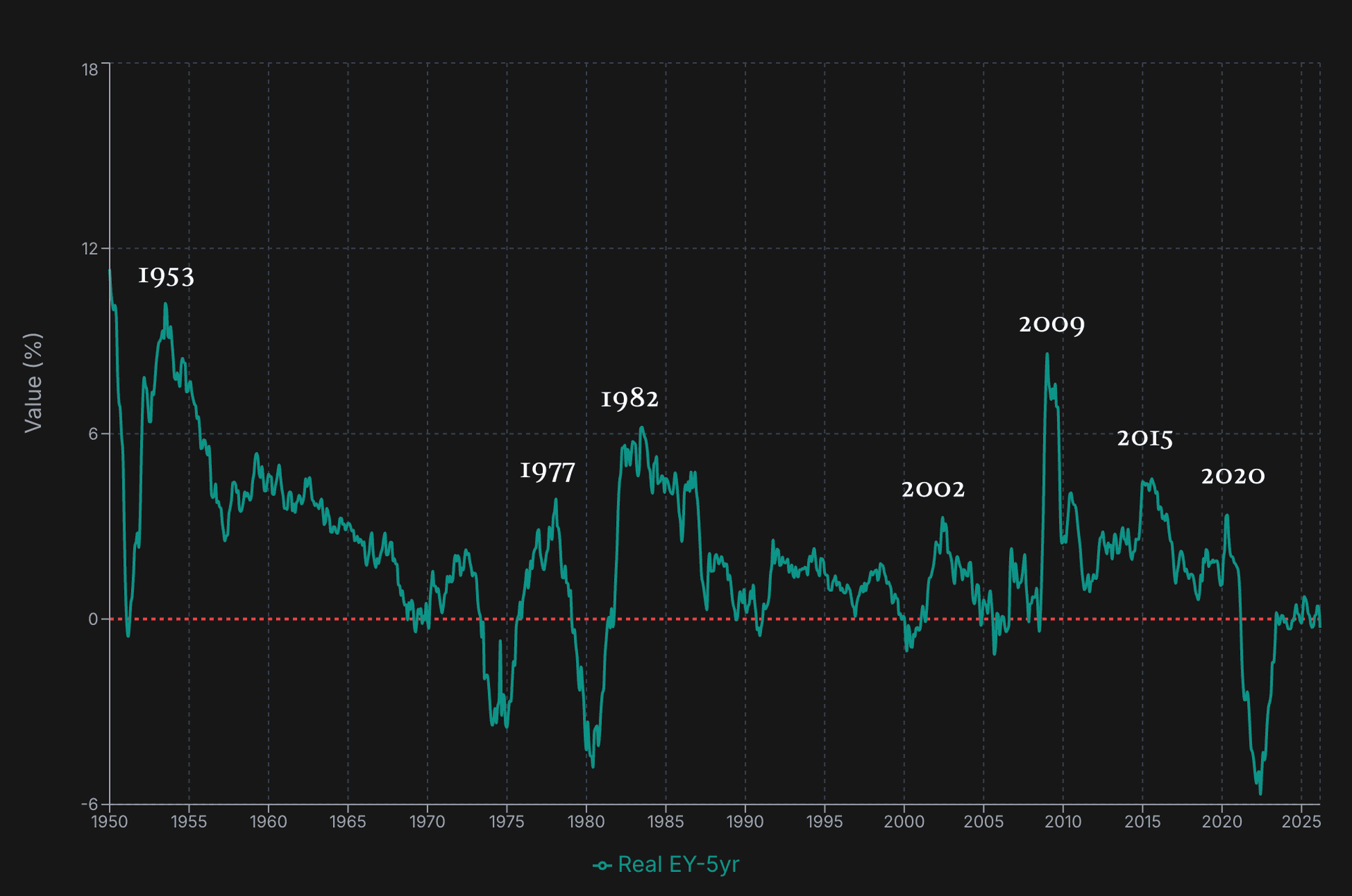
Broad Growth, Long Duration, Overvaluation — driven by REY and EYP
Normal — fallback when no outlier triggers are active
Entry / Exit Summary
| Regime | Category | Entry | Exit |
|---|---|---|---|
Liquidity Shock | Liquidity | Real M2 ≥ 10% | Real M2 < 8% |
Crisis | Liquidity | Real 10Y < -1% AND Real M2 < 5% | Real 10Y ≥ 0.5% OR Real M2 ≥ 7% |
Bond Stress | Liquidity | Real 10Y < -0.5% AND Real 3M < -1% | Real 10Y ≥ 0.25% |
Overvaluation | Valuation | EYP < -2.5% OR REY < -0.5% | EYP > 0% AND REY > 0.5% |
Long Duration | Valuation | EYP ≤ 0% AND Real 10Y ≥ 1% AND REY > 0% | EYP ≥ 0% OR EYP ≤ -2.5% OR REY < -0.5% |
Broad Growth | Valuation | REY > 3% | REY < 1% |
Normal | Default | Default state when no outlier triggers are active | — |
Click any row to jump to the full regime detail. Regimes are checked in precedence order — highest priority wins.
Key Metrics
Liquidity Shock
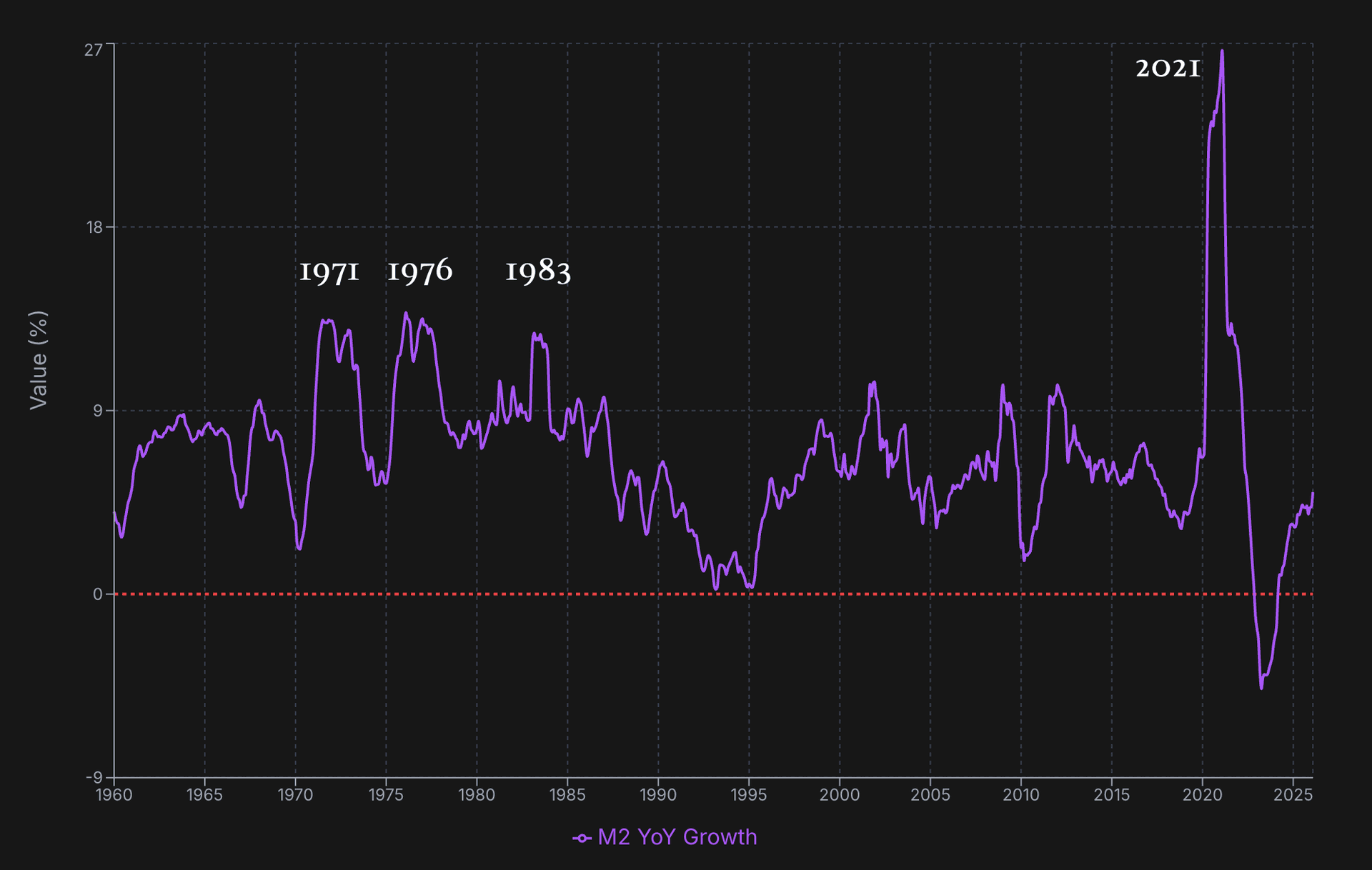
LiquidityMassive money supply growth — liquidity shock conditions. Real M2 surges well above inflation, flooding the system with cheap capital.
Massive liquidity injection — speculative assets thrive. Risk assets broadly outperform as capital seeks yield.
Crisis
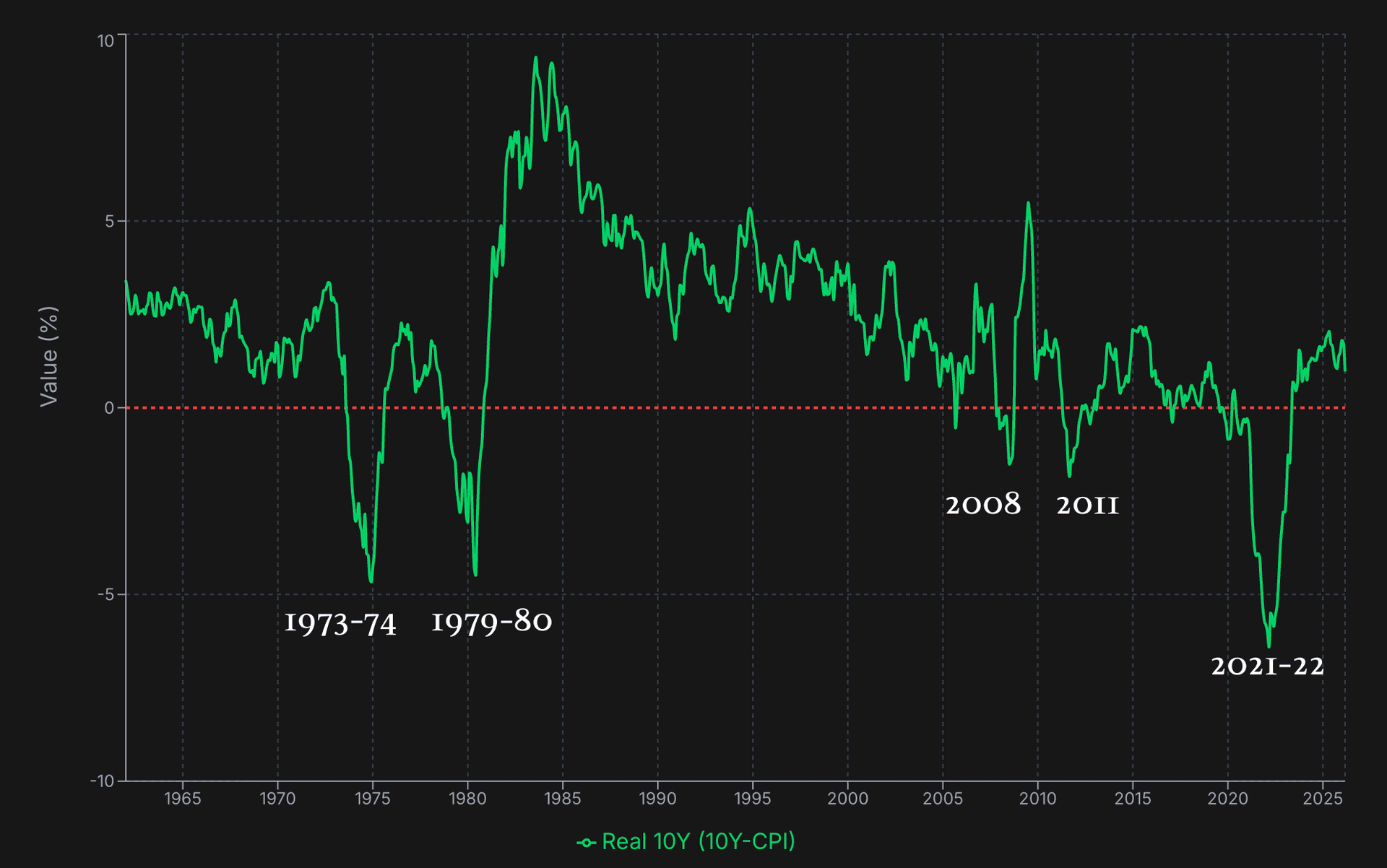
LiquidityFinancial repression with low money growth — crisis conditions. Real rates are deeply negative while money supply is tight, a dangerous combination.
Real rates negative but money tight — defensive positioning critical. Gold and short-duration assets preferred.
Bond Stress
LiquidityReal rates deeply negative across the entire yield curve — bond market stress. Both short and long-end real yields are suppressed.
Severe financial repression — rotate to gold as bonds are structurally unattractive.
Overvaluation
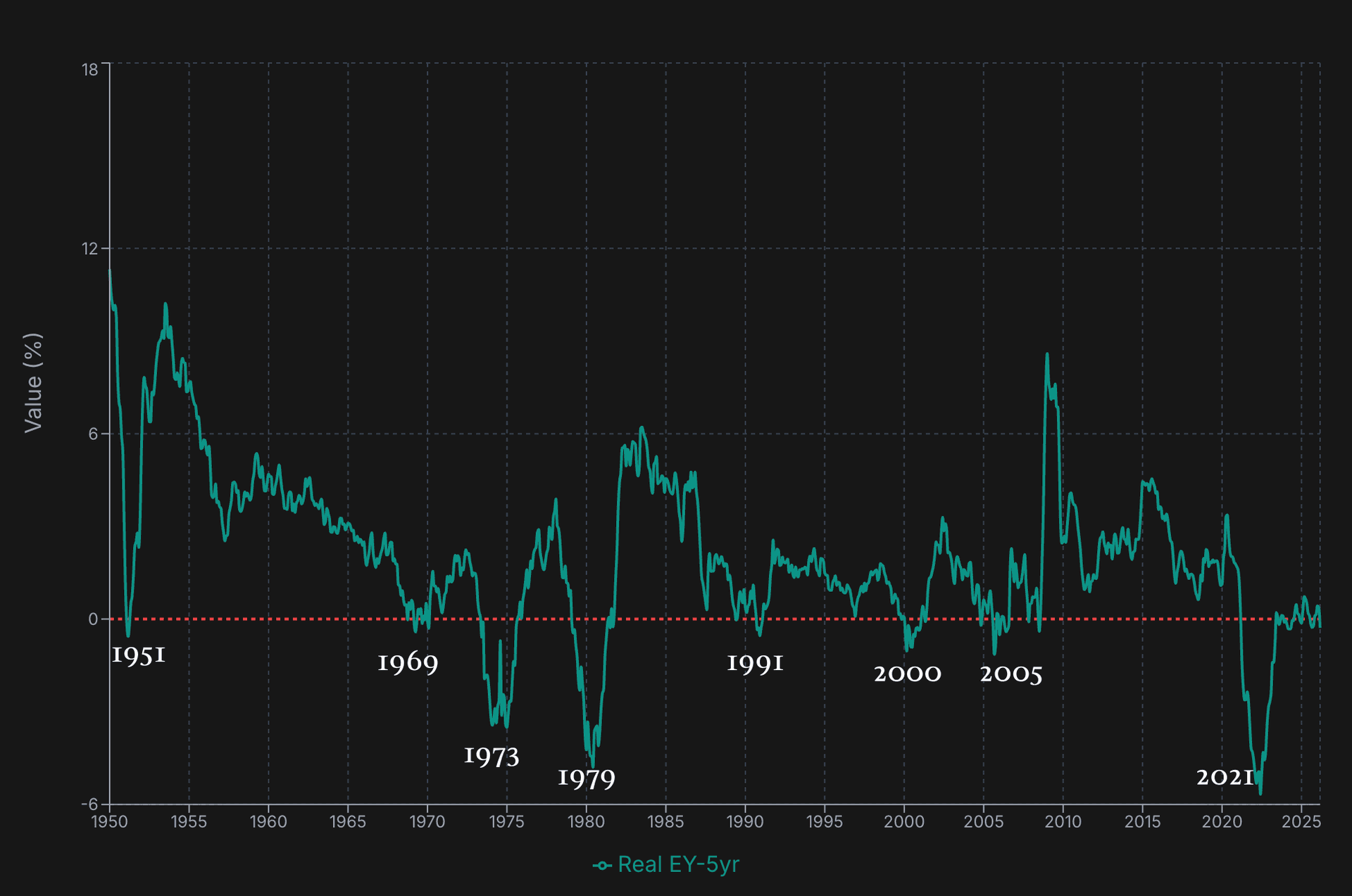
ValuationExtreme equity unattractiveness — equities far below the risk-free rate. Either the equity yield premium is deeply negative or real earnings yield is negative.
Rotate away from equities: favor bonds if Real 10Y > 0%, favor gold if Real 10Y < 0%.
Long Duration
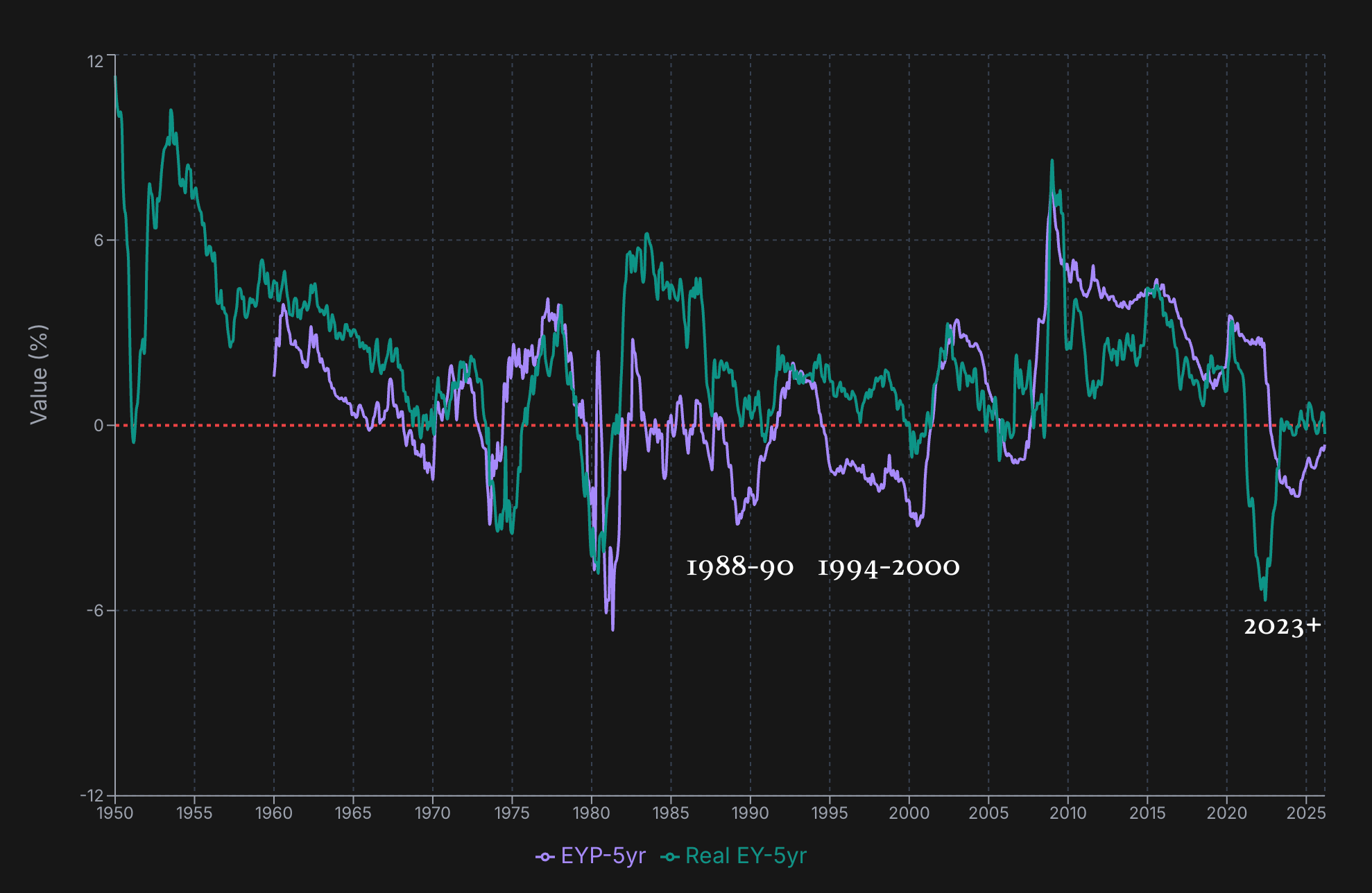
ValuationEquities overvalued relative to bonds — duration growth regime. The equity yield premium is negative but real earnings yield is still positive.
Negative equity yield premium — investors buying duration and growth. Long-duration bonds and growth equities outperform.
Broad Growth
ValuationStrong real earnings environment — healthy equity expansion. Real earnings yield is high, meaning equities are genuinely cheap relative to inflation.
Earnings growing faster than inflation — lean into quality growth and broad equity exposure.
Normal
DefaultBalanced conditions — no extreme triggers active. The market is in a standard environment without outlier signals in any direction.
Standard market environment — maintain diversified positioning.
Precedence Order
When multiple regime triggers fire simultaneously, the highest-priority regime wins. This ordering reflects severity — liquidity shocks and crises override valuation signals because they represent system-level forces.
The state machine checks triggers from rank 1 down. The first regime whose entry condition is met (and whose exit condition has not fired) becomes the active regime.
Regimes use hysteresis — entry and exit thresholds differ — so a regime won't deactivate the moment conditions slightly improve. This prevents noisy flip-flopping.